
A reverse harem is a story in which one heroine has several love interests, usually three or more men. In a true reverse harem she never has to pick just one, and in romance books that version is now often sold as “why choose”, after the question at its heart: why should she have to? Below: what it means, where the term came from, the common tropes, examples, and how it differs from harem and polyamory romance.
What does reverse harem mean?
The word is a flip of the older harem genre from Japanese manga, anime and games, in which one protagonist, traditionally a man, is surrounded by several romantic options. Reverse it and you get one heroine surrounded by several men, each of them interested in her. Readers usually shorten it to RH.
In practice the label covers two slightly different kinds of story:
- A true reverse harem ends with the heroine in a relationship with all of her love interests at once. Nobody loses, and the group is the happy ending. This is what most romance readers mean by RH today.
- A reverse harem setup surrounds the heroine with suitors but still ends with her choosing one of them, or leaves it open. Many anime and otome games work this way: every man gets a route, but each route ends with a single partner.
Book Riot’s guide to the genre adds a few finer labels. In a male harem the heroine has only male partners, who may or may not be involved with each other. In a mixed harem her partners are of different genders, and the focus stays on her. Book listings also use shorthand such as MMFM, which spells out who is in the relationship.
Where the term comes from
Anime, manga and otome games
Harem stories started in Japan in the 1970s and grew in the late 1980s and 1990s alongside dating sim games. Most were made for men. The version aimed at women got its own Japanese name, gyaku hāremu (逆ハーレム), literally “reverse harem”: a heroine courted by a cast of men, written for a mostly female audience.
Its natural home is the otome game, a romance game in which you play the heroine and each love interest has his own storyline. Games with a large cast of devoted men all centered on one heroine are the classic Japanese reverse harem. Because each route ends with one partner, though, most of them are reverse harem setups rather than true reverse harems, and the same goes for most anime adapted from them.
Romance books and “why choose”
English-speaking romance readers borrowed the term from anime fandom, and it became a shelf label of its own. Goodreads still keeps a Reverse Harem shelf. Much of the genre grew up in self-published romance, especially paranormal and fantasy series, where a heroine might end up with a pack, a crew or a band of immortals.
The name has always been awkward. “Harem” carries a history of Orientalist fiction and suggests one person collecting others, which is not what these books are about. Many authors and readers now use why choose (often written #WhyChoose), which puts the focus on the heroine’s decision rather than on how many men there are, though not everyone has adopted it. In practice the two labels mean the same thing, and books are often tagged with both.
Today why choose is less a genre than a relationship shape that sits on top of other genres: hockey romance, small-town romance, billionaire romance, fantasy and paranormal. Readers also tend to expect the group to be closed. The heroine and her partners are committed to each other, and nobody outside the group is part of the relationship.
Common reverse harem tropes
Reverse harem and why choose stories reuse a set of familiar patterns. These are the ones you will run into most:
- A cast of distinct types. Each man covers a different need: the charming golden retriever, the grump, the protector, the quiet gentle giant. Many line up with the anime dere types, and a good RH gives each one his own voice. See character archetypes for the usual lineup.
- The men already know each other. Teammates, best friends, a band, a crew, a royal guard, a shifter pack. The existing bond explains why they can share without tearing each other apart.
- One relationship at a time. The heroine usually falls for the men one by one, so the story is several slow burns running in parallel before the group comes together.
- Jealousy that gets solved, not settled. In a love triangle, jealousy ends with a winner. Here it ends with the men learning to share a life that orbits her.
- Chemistry between the heroes. Some books keep the men as friends only; others let them become partners too. Readers look for tags either way.
- The protective group. Three or four people ready to fight for her is a big part of the fantasy, and the “who did this to you?” moment from the wider romance tropes list gets multiplied.
- Bonds, packs and mates. Paranormal RH often explains the group with a magical bond or fated mates, and it often overlaps with omegaverse pack romance.
- A heat level for every reader. Reverse harem runs from sweet, closed-door stories to very explicit ones, so readers check the spice rating and content notes before buying.
Reverse harem examples
Here is how the genre looks on the page and on screen, from a full why choose romance to anime and games that use the route-by-route setup.
Pucking Around by Emily Rath (2023)
The why choose hockey romance that made Emily Rath’s Jacksonville Rays series a TikTok hit. Rachel Price lands a ten-month fellowship as a physical therapist for a new NHL team and discovers that her perfect one-night stand is one of the players. He wants her back; his best friend, the team’s surly equipment manager, keeps riding her case; and a stubborn, superstitious goalie is hiding an injury. The publisher calls it a sexy, inclusive, poly why choose romance, so she does not have to pick just one.
Mr Love: Queen’s Choice (anime, 2020)
A 12-episode MAPPA anime based on Papergames’ otome game, and tagged as reverse harem by Anime News Network. The heroine has inherited her late father’s struggling production company and is trying to save his TV show when she meets four men with special powers: Victor (28), the CEO of Loveland Financial Group; Lucien (26), a neuroscientist; Gavin (24), a police officer who is secretly a special agent; and Kiro (22), a pop superstar. A conspiracy about their powers drives the plot, with romance around it.
Collar x Malice and Tears of Themis (otome games)
Both are covered in our otome game guide, and both show the reverse harem setup in its route-by-route form. In Collar x Malice (Otomate, 2016), Ichika Hoshino, a 21-year-old rookie police officer, teams up with five men aged 23 to 29, among them an ex-detective, a bodyguard and a hacker, to stop a terror group in a locked-down Shinjuku. In Tears of Themis (miHoYo, 2020), you play a 24-year-old defense attorney whose leads include Artem Wing (29), her senior attorney, and Vyn Richter (27), a psychiatrist. Each man gets his own route or story, and the romance stays one-on-one.
Reverse harem vs harem vs polyamory romance
These three get mixed up all the time. The quick version: a harem and a reverse harem are mirror images of each other, and polyamory romance is about the whole relationship rather than one person at its center.
| Harem | Reverse harem / why choose | Polyamory romance | |
|---|---|---|---|
| Who is at the center | One protagonist, traditionally a man | One heroine | Nobody has to be; the group matters |
| Love interests | Several women, traditionally | Several men, usually three or more | Any genders, often two or three partners |
| How it ends | Often open, or one final choice | With all of them (true RH) or one per route (anime, otome) | A relationship shape the characters build together |
| Do the partners date each other? | Rarely | Sometimes; it depends on the book | Often; each connection counts |
| Where you find it | Anime, manga, light novels, games | Otome games, anime, self-published and traditional romance | Contemporary and fantasy romance |
Reverse harem vs polyamory. Book Riot calls polyamory the technical term for reverse harem relationships, but readers tend to treat them as different reads. A reverse harem is a fantasy centered on the heroine, with the hard parts compressed or skipped. Polyamory romance gives more weight to how everyone relates to everyone else. Katee Robert’s Wicked Beauty (2022) is a good example of the second kind: In this modern Greek-myth retelling, Achilles and Patroclus have been partners for a decade when Helen Kasios enters their lives, and the book builds a throuple in which all three relationships matter. Real-life polyamory runs on honest communication and consent between everyone involved, which fiction often speeds past.
Reverse harem vs love triangle. A love triangle is a story about scarcity: she has to choose, so someone loses. A reverse harem is a story about abundance: the choice is refused.
Why readers love reverse harem
The appeal is not complicated. You get several romances in one story, each with its own dynamic, without the ache of watching a great character lose. The men are written to complement each other, so the heroine gets devotion, humor, protection and tenderness at once.
There is also the found-family feeling: the best reverse harem books end with a household, not just a couple. And because it is fiction, the group can be improbably harmonious. Readers know real relationships take more work; the genre lets them skip the scheduling.
FAQ
What does “reverse harem” mean?
It means a story in which one heroine has several love interests, usually men, and does not have to choose between them. In a “true” reverse harem she ends up with all of them.
What is the difference between a reverse harem and a normal harem?
A normal harem centers one protagonist, traditionally a man, surrounded by several romantic options and made mainly for men. A reverse harem flips it: one heroine, several men, made mainly for women.
What is the difference between polyamory and reverse harem?
Reverse harem centers the heroine and her relationship with each man; the men may or may not be involved with each other. Polyamory romance gives weight to every relationship in the group. Many readers treat reverse harem as the fantasy and polyamory romance as the closer-to-life version.
What does “why choose” mean in books?
It is the newer label for reverse harem romance, from the question “why choose?”: the heroine keeps all of her love interests instead of picking one. Most readers use the two terms interchangeably.
What does RH mean in books?
RH stands for reverse harem. You will see it in book tags and reviews next to shorthand such as MMFM, which lists who is in the relationship.
Is there a new reverse harem anime coming out in 2026?
Reverse harem anime keep appearing, often as otome game adaptations, but seasonal lineups change fast, so check the current season’s announcements. If you want one to watch now, Mr Love: Queen’s Choice (2020) is a good place to start.
Build your own reverse harem cast
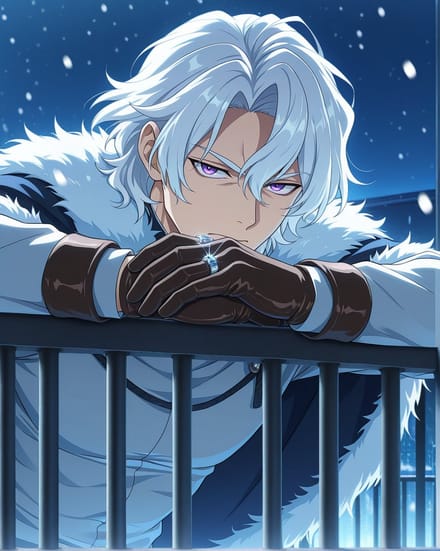

Every reverse harem starts with a lineup of very different men. On Cherrypop.ai (18+) you can meet two to start: Leon, a prickly-but-devoted tsundere, and Alexei, a kuudere who keeps his cool until he doesn’t. Or create your own love interests, writing each one’s personality, scenario and first message yourself. It runs in your browser and is free to start, with limits.