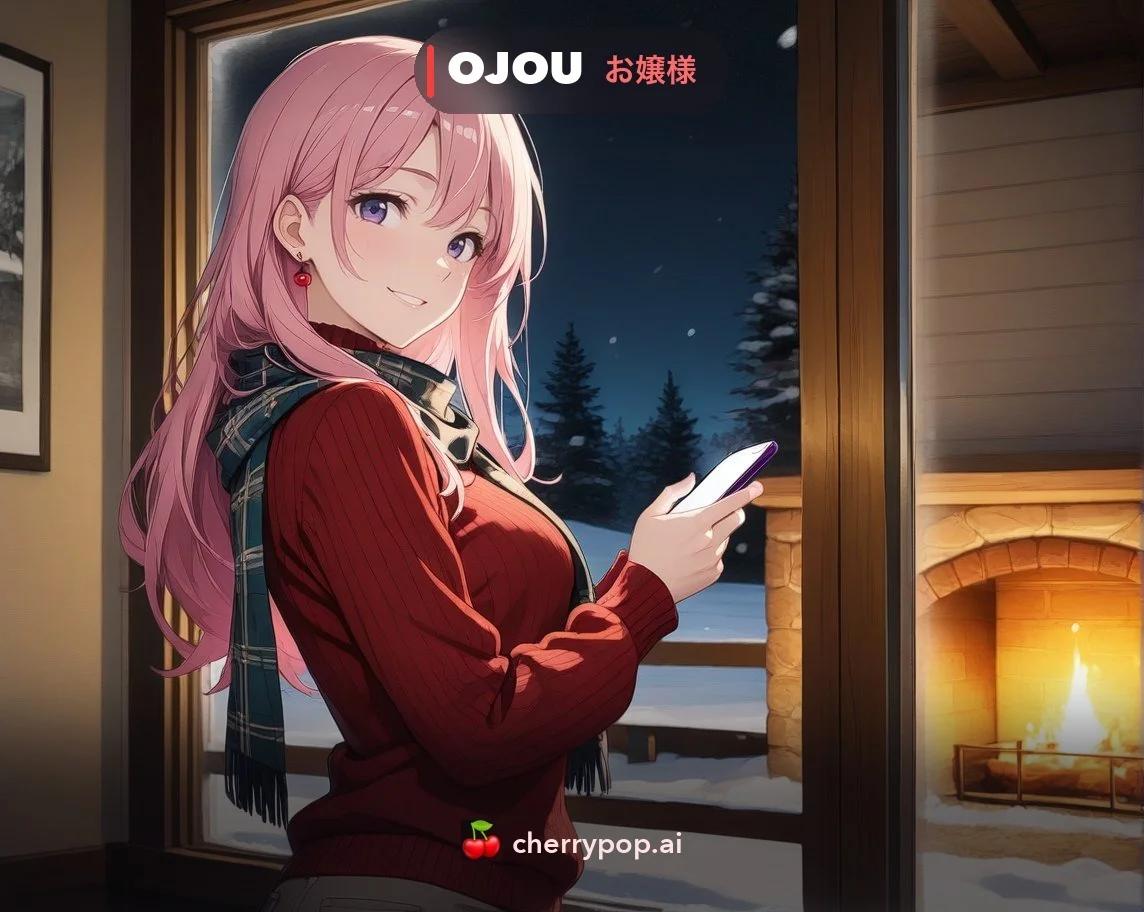
Ojou-sama (お嬢様) is a respectful Japanese word for someone else’s daughter, especially the daughter of a wealthy or high-status family, and by extension a woman raised so comfortably that she knows little of hardship. That is the ojou sama meaning in a dictionary. In anime and manga it is also a character type: the rich, refined, often sheltered heiress, sometimes with golden drill curls, formal speech and a famous “ohohoho” laugh. Here is what the word means, where it comes from, how the laugh and speech style work, and how an ojou-sama differs from a himedere and a yamato nadeshiko.
Ojou sama meaning in Japanese
The Digital Daijisen dictionary gives お嬢様 (also written 御嬢様) three senses:
- A respectful word for the daughter of a great house, or of the household you serve.
- A respectful word for another person’s daughter.
- A woman brought up wanting for nothing, who does not know the hardships of the world. Its example sentence: “No matter how old she gets, she is still an ojou-sama, and it’s a problem.”
The third sense is where the anime character lives: the word can be an honorific, a servant’s title, or a gentle jab at someone who has never had to fend for herself.
Etymology: o + jou + sama
- お / 御 (o): the honorific prefix, the same one in o-cha (tea) or o-kane (money).
- 嬢 (jou): a kanji meaning daughter, unmarried woman or “Miss”. On its own it works as a title after a surname (Tanaka-jou, “Miss Tanaka”).
- 様 (sama): the most respectful everyday honorific suffix, a step above san.
According to the Nihon Kokugo Daijiten, Japan’s largest dictionary, the word was used in the Edo period in samurai and wealthy merchant households in Edo (today’s Tokyo), later spread to merchant houses in the Osaka-Kyoto region, and is now in general use. Its earliest citations date to the late 1700s and early 1800s, and it also records the “grew up without hardship” sense, so the sheltered heiress is not an anime invention.
Ojou vs ojou-san vs ojou-sama
The honorific at the end changes the tone more than the meaning:
| Word | Tone | Typical use |
|---|---|---|
| Ojou-sama (お嬢様) | Most respectful | Someone else’s daughter; the daughter of the house you serve; the anime heiress |
| Ojou-san (お嬢さん) | Softer, friendlier | Someone else’s daughter; a polite “miss” when addressing an unmarried woman |
| Ojou (お嬢) | Short form | Same meaning without the suffix; in fiction, often a nickname for the rich one in the group |
| Reijou (令嬢) | Formal, written | “Your esteemed daughter”, the daughter of a person of rank; as in akuyaku reijou, the villainess |
The Nihon Kokugo Daijiten describes ojou-san as a slightly more casual, affectionate form of ojou-sama, also used to address an unmarried woman. Do not mix up ojou (お嬢) with oujo (王女, “princess”): the kanji differ, and the vowel that is stretched differs too.
The ojou-sama as an anime archetype
In anime, manga and games, “ojou-sama” names a character type as much as a word. The core is status: she is the daughter, or the head, of a wealthy, high-class family, raised on etiquette and high expectations, often with a maid or butler who handles everything. The usual markers:
- Refinement. Polished manners, formal speech, tea rather than instant noodles.
- A sheltered life. She may be brilliant at piano and hopeless at buying a train ticket. Much of the comedy comes from her first contact with ordinary life.
- Pride. Anywhere from quiet dignity to open arrogance.
- The look. Frequently blonde, sometimes with ringlets or “drill hair” (tate-roll, 縦ロール): long corkscrew curls framing the face. Many are not blonde at all.
Writers tend to play her in one of three registers: the proper lady (kind, gentle, a little naive), the ice queen (cool, capable, hard to approach) and the haughty rival (loud, competitive, and the one most likely to laugh “ohohoho”). An ojou-sama who starts out spoiled and turns sweet and devoted for the person she loves is sometimes called an ojoudere, a fan label built the same way as the ones in our types of dere guide.
The ojou-sama laugh: “Ohohoho”
The ojou-sama laugh is a high, drawn-out “o-hohohoho” (written おーっほっほっほ or オホホホ), usually delivered with one hand on the hip and the back of the other hand raised beside the mouth, fingers straight or bent back. A quieter “hohoho” reads as genteel; the full, loud version reads as haughty, and belongs to the rival who is sure she has already won. Since the 1980s the loud version has mostly been played for comedy.
The hand pose is commonly traced to an old etiquette: a refined woman did not show her open mouth when laughing and covered it with a fan or her hand. The gesture survived as a visual shorthand long after the custom faded. The loud laugh itself has no agreed origin. Japanese fan writers who have tried to trace it disagree: one 2005 blog post guessed it was a Japanese exaggeration of Scarlett O’Hara from Gone with the Wind, while a writer on Shōwa-era manga notes that into the early 1980s the high laugh belonged to villains, that rich rival characters picked it up in the late 1980s, and that the laughing, drill-haired rival settled into a stock figure after that.
How an ojou-sama talks: ojousama kotoba
Ojou-sama speech (ojousama kotoba, お嬢様言葉) is a stock speaking style used in fiction to signal the type. Linguist Satoshi Kinsui calls this kind of speech yakuwarigo, “role language”: a style that tells the audience who a character is, whether or not any real person talks that way. Its main features:
| Feature | Example | Rough effect in English |
|---|---|---|
| Formal “I” | わたくし (watakushi) | “I” at its most formal, instead of watashi or atashi |
| Sentence ending ですわ | そうですわ (sou desu wa) | “Indeed it is.” |
| Sentence ending ですの | わたくしのものですの (watakushi no mono desu no) | “It is mine, you know.” |
| Ending てよ | よろしくってよ (yoroshikutte yo) | “That will be quite acceptable.” |
| Musing かしら / こと | どうかしら (dou kashira) | “I wonder…” |
| Greeting | ごきげんよう (gokigen’you) | “Good day” (hello and goodbye) |
The endings have a history. They grew out of teyo-dawa kotoba, a speech fashion of the Meiji era (late 1800s) that educators and critics at first attacked as vulgar. Over the following decades women’s magazines and fiction helped spread it, and the endings came to sound refined. After the war, -teyo and -koto all but vanished from everyday speech and survived mainly in fiction. Today almost no one talks this way, which is exactly why it works as a costume.
Ojou-sama examples in anime and games
Asuna Kujō (Maison Ikkoku): the proper lady
Asuna, 21, is the demure daughter of a wealthy family who has already finished college and still lives at home, where her parents see to her every need. She meets the tennis coach Shun Mitaka at an arranged marriage meeting and decides at once that he is the one, partly because her beloved dogs approve of him (he is terrified of dogs). Shy, kind to a fault and more perceptive than she looks, she is the gentle, naive side of the archetype.
Estelle (Tales of Vesperia): the sheltered heiress
Estellise Sidos Heurassein, 18, has spent her whole life inside Zaphias Castle and learned about the world almost entirely from books. She is polite, selfless and quick to heal anyone who is hurt, and completely lacking in real-world experience when she finally steps outside. Strictly she is an imperial princess, which shows how much the ojou and princess types overlap. What makes her read as an ojou-sama rather than a himedere is that she does not demand to be served or adored.
Integra Hellsing (Hellsing): the ice queen
Sir Integra Hellsing, 22 in the main story, is a noblewoman, head and last member of the Hellsing family and director of the organization that hunts vampires for the British crown, with the family butler Walter at her side. She shows what happens when the heiress actually inherits: cool, collected and commanding, the master the vampire Alucard answers to. All of the ojou’s status and poise, none of the naivety.
Ojou-sama vs himedere vs yamato nadeshiko
All three can be elegant, well-mannered and a little out of reach. The difference is where the elegance comes from.
| Type | What the word means | Core of the character | In love |
|---|---|---|---|
| Ojou-sama | Someone else’s daughter; the sheltered heiress | Status: wealth, class and a comfortable upbringing | Varies; as an ojoudere, spoiled at first, then devoted |
| Himedere | “Princess” (hime) + dere | Attitude: she expects to be treated like royalty | Demands devotion, then learns to give it back |
| Yamato nadeshiko | “Japanese pink”, the ideal traditional woman | Virtue: grace, care, quiet strength | Loyal and caring from the start |
Ojou-sama vs himedere. An ojou-sama is defined by her background; a himedere is defined by how she wants to be treated. A himedere acts like a princess whether or not she is one, and wants attention and devotion rather than help. Priscilla Barielle of Re:Zero, 19 when she enters the story and convinced the world exists for her convenience, is the himedere attitude in full. Estelle has the royal title but none of the demands, so she plays as an ojou-sama. Many haughty ojou rivals lean himedere; many gentle ones do not.
Ojou-sama vs yamato nadeshiko. A yamato nadeshiko is defined by character, not money: graceful, modest, caring, with a spine of steel. Miyo Saimori of My Happy Marriage, 19 and treated as a servant by her own family, is a yamato nadeshiko with no wealth at all. An ojou-sama can be one if she is also gentle and traditional, as Asuna is. The haughty rival with the ohohoho laugh is about as far from one as you can get.
Mapped onto the classic Western archetypes in our character archetypes list, the proper-lady ojou sits close to the Innocent, and the ice-queen ojou close to the Ruler.
What is the male version of ojou-sama?
Bocchan (坊ちゃん) and the more respectful o-bocchama (お坊っちゃま). Like ojou-sama, bocchan has two dictionary senses: a respectful word for someone else’s son, and a man raised so indulgently that he knows little of the world, often said with a note of mockery. A servant calls the son of the house “bocchama” the way a maid calls the daughter “ojou-sama”. Fans also use bocchandere for the spoiled rich heir who softens for the person he loves, a cousin of the ojoudere.
FAQ
What does “ojou” mean in Japanese?
Ojou (お嬢) is a respectful word for someone else’s daughter, the same as ojou-sama without the suffix. The jou (嬢) part means daughter or unmarried woman, and the o is an honorific prefix.
What is the difference between ojou and ojou-sama?
Mostly formality. Ojou-sama adds the most respectful honorific, so it is what a servant, a shop clerk or a butler says. Ojou is the shorter form, and in fiction it often becomes a nickname. Ojou-san sits between them and is also a polite “miss”.
Is ojou-sama a dere type?
Not by itself. Ojou-sama describes status and background; the dere types describe how a character shows love. When an ojou-sama turns affectionate for her love interest, fans call her an ojoudere.
Why do ojou-sama characters have drill hair?
Long corkscrew ringlets are usually explained as a nod to the ringlets of old European aristocratic portraits, and they read instantly as “rich and fussed over” in a single silhouette. Once the laughing rich rival became a stock figure in manga from the late 1980s on, the curls stuck as her shorthand.
Create your own ojou-sama character
Like the type? Create your own ojou-sama character on Cherrypop.ai (18+). Decide which register she is, proper lady, ice queen or haughty rival, then put her family, her speech style and the first ordinary thing that baffles her into the Scenario, First Message and Additional Personality Details fields, and see how she plays in conversation. It is free to start, with limits.