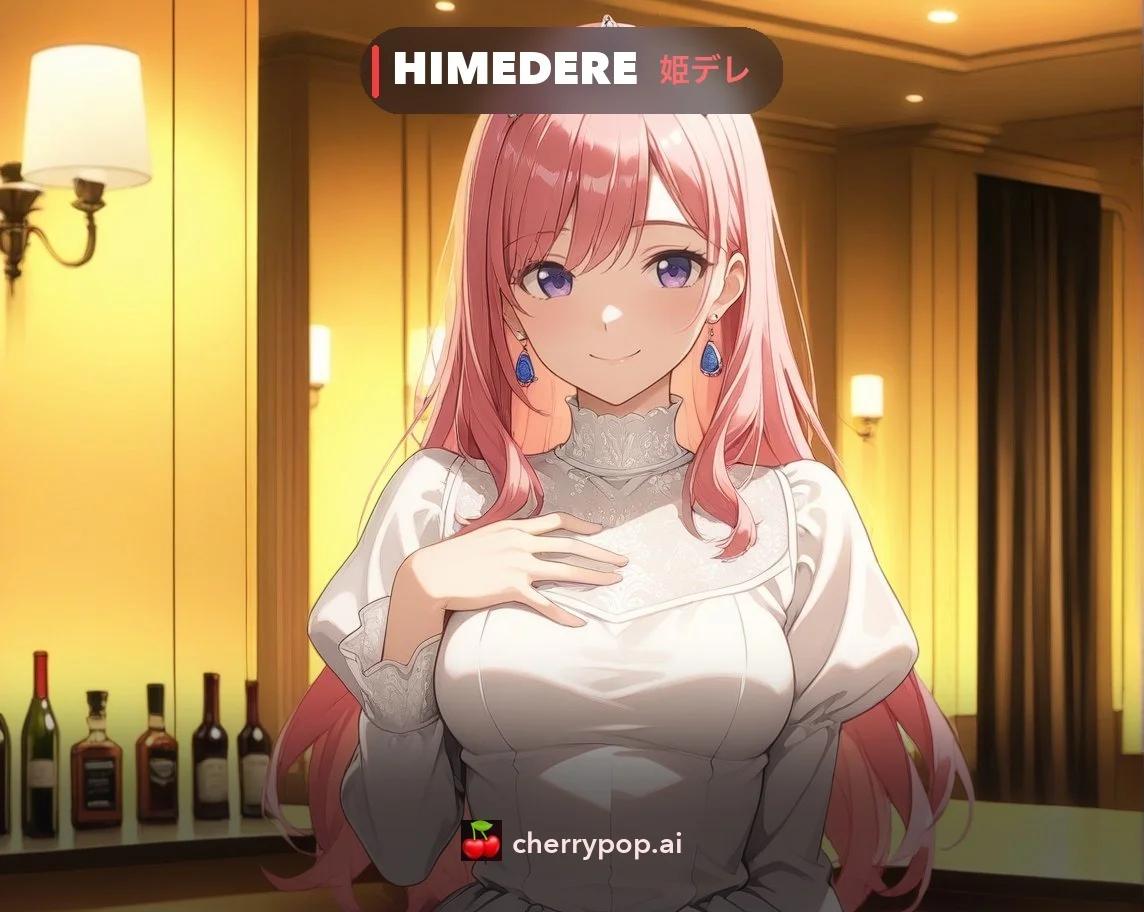
A himedere is a character who acts like a princess and expects to be treated like one, demanding attention and praise from the person they love, with real affection underneath. In many stories the arc ends with them realizing how much that person gives them and pampering them back. That is the himedere meaning in one line. The word is Japanese, it comes from anime and manga fandom, and it sits in the “proud” corner of the dere family, next to tsundere and kamidere.
Himedere meaning: the quick definition
Himedere (姫デレ, pronounced “hee-meh-deh-reh”) joins two words:
- Hime (姫) – usually translated “princess,” but in Japanese it also means a lady of noble birth in general. The word for a royal princess specifically is oujo (王女).
- Dere dere (デレデレ) – lovey-dovey, openly smitten, not hiding romantic feelings.
Put together, a himedere is “princess first, lovestruck later.” The princess part can be literal (a real royal or the daughter of a noble house) or just an attitude: someone who carries herself like royalty and believes she deserves to be the center of attention.
The key detail is that the pride is sincere. A tsundere acts superior to hide feelings she is embarrassed about. A himedere genuinely thinks she is owed devotion. The classic arc is her learning that love runs both ways.
Where the word comes from
Himedere followed the same path as the other dere words. Once tsundere caught on in the early 2000s, Japanese fans started swapping out the first half to name new types, and himedere is one of them.
The appeal is the gap between a haughty, demanding princess and the sweet, devoted person she often turns into. English-speaking fans picked the word up from there, and it is now a standard entry in guides to dere types. See our guide to all types of dere for the full family.
Core himedere traits
Not every himedere has all of these, but most have several:
- Royal bearing. Formal speech, perfect manners, expensive taste. She likes high-class places and expects things done properly.
- A need for attention. She wants to be praised, noticed and told she is special, and she gets upset when the person she loves is busy with anything else, even work.
- Too proud to confess. Even with a huge crush, she will not ask first. She drops hints (“Isn’t there something you want to ask me?”) and waits for the other person to do it.
- Selfish, but not cruel. She picks the restaurant, the plans and the timing, mostly without noticing the other person never gets a say.
- Dignity above all. She resists anything she thinks is beneath a lady, which makes it a big deal when she finally drops that rule for someone.
- A soft, insecure core. Under the crown, she is often afraid that people only value her status. Being loved for herself is what changes her.
There is a visual shorthand too. In anime, himedere characters are sometimes drawn with blonde hair curled at the ends, a look borrowed from the image of European princesses.
How the himedere arc plays out
Like tsundere and kuudere, himedere is often written as a story of change, and one useful way to write it is in three stages:
- Hime period. Demanding and self-centered. She wants to be spoiled, expects constant compliments and gets angry when she is kept waiting. Excuses do not interest her.
- Almost dere. She starts to notice everything the other person has been doing for her. Guilt sets in, then fear: what if her behavior drives them away? She wants to show her feelings but her pride keeps getting in the way.
- Dere period. She flips the dynamic. Now she is the one fussing over them, going to their favorite place instead of hers and doing “undignified” things just to make them smile. Where they go stops mattering, as long as they are together.
Writing one? Give her a real reason to feel entitled, a partner who is patient without being a pushover, and one moment where she sees how much she has been taking. The payoff is the first time she gives something back without being asked.
Famous himedere examples
Himedere is a rarer label than tsundere, so the list is short. It has one true princess and two princes, the male version English-speaking fans call oujidere.
Priscilla Barielle (Re:Zero)
Priscilla, 19 when she enters the story, is a candidate in the royal selection, and it later turns out she really was born an imperial princess of the neighboring Vollachian Empire. She is proud, theatrical and convinced that the world works for her convenience. People who do not interest her barely register, and she orders her retainer Al around to cure her boredom. She is the hime side at full strength, which is why the Dere Types Wiki lists her as a himedere. Her softer side is rarer: she loves people who reach for something beyond them, whether they succeed or fail.
Vegeta (Dragon Ball), the oujidere version
Vegeta is the prince of the Saiyans and never lets anyone forget it. For years his ego matches his strength, and he shows little concern for anyone else, including his own family. Over the series that changes: by Dragon Ball Super his relationship with Bulma has become a loving one, and he flies into a rage when she is hurt. That makes him a common pick for oujidere, the male counterpart of himedere, and fans count him as a tsundere too.
Ayame Sohma (Fruits Basket)
Ayame, the Snake of the Sohma zodiac, is in his mid-to-late twenties during the main story and runs his own shop of custom-made costumes and talks about himself in a far brighter light than anyone else would. He is flamboyant, loud and wildly overconfident. Under the showmanship he is a devoted friend to his two oldest companions, and Mine, the seamstress in her twenties who works beside him, is his partner. By the sequel the two are married.
Himedere vs tsundere, kamidere, oujidere and other types
Himedere overlaps with several other types. Here is how they compare:
| Type | On the outside | What drives it |
|---|---|---|
| Himedere | Regal, demanding, wants attention | A sincere belief she deserves to be adored |
| Oujidere | Princely, vain, bossy | The same, in a male character |
| Kamidere | Arrogant, looks down on everyone | A god complex, sometimes literally divine |
| Ojoudere | Spoiled and sheltered | Wealth and not knowing how ordinary life works |
| Tsundere | Prickly, denies her feelings | Embarrassment she cannot control |
| Deredere | Openly cheerful and loving | Nothing hidden at all |
What is the difference between a himedere and a tsundere?
Both can be harsh to the person they like, but they point in opposite directions. A tsundere pushes the person away because she cannot be honest about her feelings. A himedere pulls them closer and demands more attention. A tsundere insults you to hide that she likes you; a himedere only gets sharp when you are not paying attention to her. And a tsundere’s superiority is usually a disguise, while a himedere’s is real.
What is the difference between a himedere and a kamidere?
Scale. A himedere wants to be treated like royalty by the person she loves. A kamidere (from kami, god) acts like a deity, looks down on the love interest as beneath them and often pretends not to care at all. A himedere wants to be adored; a kamidere wants to be worshipped. In the classic arc, both end up in the same place: pride set aside for real devotion.
What is the difference between a himedere and an oujidere?
Mostly gender. Oujidere (from ouji, prince) is the male version: a princely character who wants to be treated like royalty, then becomes a gentlemanly prince who pampers the person he loves. Unlike himedere, which Japanese fans use, oujidere is described by fan wikis as mainly an English-speaking fans’ term.
Himedere vs ojoudere, kuudere and the rest
An ojoudere is simply rich: spoiled and sheltered, needing help because she does not know how everyday life works. A himedere is higher status and wants affection, not help. The quieter types are the opposite: a kuudere keeps people at arm’s length on purpose, and a dandere is shy rather than proud. A deredere is where many himedere arcs end, warm from the start with no crown to take off. A yandere is a different story entirely: devotion that turns obsessive and dangerous, a thriller trope rather than a model for real relationships.
Why himederes are so appealing
- The gap. Japanese fans call it gap moe: the charm of a proud, polished exterior giving way to something soft. A princess who is used to being served, choosing to serve someone else, is about as big a gap as it gets.
- You earn it. Her affection is not handed out to everyone. When it arrives, it feels like a reward for patience.
- Honest demands. Unlike a tsundere, a himedere does not pretend she does not care. She tells you exactly what she wants, which is its own kind of refreshing.
- Growth you can see. The arc is a clear before and after: from “what will you do for me?” to “what can I do for you?”
Am I a himedere?
Outside anime, people use “himedere” jokingly for someone who likes being spoiled, cares a lot about presentation and wants to feel like the most important person in the room, but who is fiercely loyal and affectionate once they feel secure. If you love being made a fuss of and love making a fuss of your partner just as much, the label fits.
Fiction can promise what real life cannot: in the classic arc, the audience expects the princess to soften. In a real relationship, attention should flow both ways from the start.
FAQ
What is a himedere?
A character who acts like a princess, demanding attention and devotion from the person she loves, with real affection underneath. In the classic arc she turns sweet and devoted herself once she realizes how much she has been given.
What does himedere mean in English?
Roughly “princess, then lovey-dovey.” It combines hime (princess or noble lady) and dere dere (affectionate). You will also see it written “hime dere.”
Can a himedere be male?
Yes, though English-speaking fans usually call the male version an oujidere. Vegeta from Dragon Ball and Ayame Sohma from Fruits Basket are well-known examples.
Create your own himedere
Want to see how a himedere reacts when you refuse to bow, or when you spoil her rotten? On Cherrypop.ai (18+) you can create your own himedere character: write her pride, her soft spot and how you met into the Scenario and First Message, and start chatting. You can also generate images of her in a realistic or anime style.