
A waifu is a fictional character, usually a woman from an anime, manga or video game, that a fan has a serious crush on and jokingly calls their “wife.” That is the whole waifu meaning in one line: the word is simply “wife” pronounced the Japanese way, and fans use it to name the character they love most.
Below: where the word comes from, what it means when someone calls a character their waifu, how it differs from husbando and best girl, how waifu culture works, popular examples, and how AI waifus and AI companions fit in.
Waifu meaning: the short definition
Dictionary.com defines a waifu as “a female character in an anime, manga, or video game that a fan is particularly attracted to.” It is pronounced “WY-foo,” and the plural is waifus.
In everyday fan use, the word covers a range of feelings. For some people it is a light joke (“Yor is my waifu”) meaning “my favorite character.” For others it is a real emotional attachment: the character they would pick above all others, the one they buy figures of, draw, cosplay or defend in arguments. The joke and the sincere version use exactly the same word, which is part of its charm.
What does waifu stand for? Nothing. It is not an acronym. It is the English word “wife” written the way Japanese sounds it out: ワイフ, wa-i-fu.
Where the word comes from
The word has two layers of history.
The Japanese loanword. Japanese has borrowed English words for a long time, and ワイフ (waifu) is an old one. The Nihon Kokugo Daijiten, Japan’s largest historical dictionary, lists it as a loanword meaning “wife,” with its earliest recorded use in 1860. In Japanese it is a borrowed synonym for a real wife, listed next to native words like tsuma and kanai. The fan meaning, a fictional character you adore, came from English-speaking anime fans, not from Japanese usage.
The fan slang. The modern meaning grew out of an early-2000s anime fan meme. English-speaking viewers latched onto a line where “my wife” is said in English with a Japanese accent, “mai waifu,” and started repeating it about characters they loved. By the mid-2000s “mai waifu” was showing up on anime forums, and through the late 2000s it became everyday vocabulary on anime imageboards, both as affection and as teasing. From there it spread to gaming, Western cartoons and the rest of the internet, and it is now common enough to have its own dictionary entry.
Waifu vs husbando vs best girl
Fans use a small family of related words. They overlap, but each has its own job.
| Term | What it means | Scope | Example use |
|---|---|---|---|
| Waifu | The fictional woman you are most attached to | Across everything you watch or play | “Tifa has been my waifu for years.” |
| Husbando | The male version: your fictional husband | Across everything you watch or play | “Levi is my husbando, no contest.” |
| Best girl / best boy | Your favorite character within one series | One show or game | “Robin is best girl in One Piece.” |
| Waifu material | Someone with the qualities you would want in a waifu | A compliment, sometimes aimed at a real person | “She cooks, she games, she’s waifu material.” |
Husbando came later than waifu and was built by analogy: fans took “husband” and gave it the same Japanese-sounding ending. Japanese does have a loanword for husband, ハズバンド (hazubando), but “husbando” in the fan sense was coined by English-speaking fans years after waifu, as its mirror image. Pronounce it “huz-BAN-doh.”
Best girl is a verdict, not a relationship. You can have a best girl in every series you watch but, by fan tradition, only one waifu. Your waifu is often a former best girl who never left.
Waifu culture: how fans actually use it
Waifu culture is mostly playful, and a few running jokes explain it better than any definition:
- One waifu only. The oldest rule in the book. Switching waifus every season is treated as mild betrayal, and “your laifu (life) is ruined” is the joke about breaking that rule or taking it too seriously.
- “Your waifu is trash.” The standard fan insult, usually meant as banter.
- Waifu wars. Endless polls, tier lists and threads arguing whose waifu is best. Nobody wins, and that is the point.
- Showing devotion. Figures, body pillows, fan art, birthday posts on the character’s canon birthday, and cosplay are all ways fans celebrate their pick.
Under the jokes there is something real. Researchers call it a parasocial relationship: a one-sided emotional bond with a character or media figure. A study of anime fans published in Psychology of Popular Media in January 2026 found that people do report genuine feelings of love for fictional partners. Men in the study tended to describe sexual connections, tied to a character’s appearance, while women more often described emotional connections, tied to a character’s personality. In both cases, feeling similar to the character mattered.
For most fans a waifu sits alongside a normal life, the same way a crush on a film star does. Where people poke fun at it is when the attachment starts replacing real friendships, which is what the “laifu” jokes are really about.
Popular waifu and husbando examples
There is no official list, but these characters come up again and again when fans name their pick.
Waifus
- Yor Forger (Spy x Family). A 27-year-old professional assassin, the “Thorn Princess,” with a day job at city hall. Deadly at work, sweet and flustered at home, and famously hopeless at cooking. She ranked sixth for Best Female Character in the 2021-2022 Newtype Anime Awards.
- Misato Katsuragi (Neon Genesis Evangelion). Creator Hideaki Anno described her as a 29-year-old woman, and she is a military officer who is sharp on duty and a mess off it. She has appeared at the top of fan popularity polls.
- Tifa Lockhart (Final Fantasy VII). The martial artist and bar owner who has been a gaming favorite since 1997. She is 20 in Final Fantasy VII and its Remake, and older in the sequels.
- Nico Robin (One Piece). The calm, dry-humored archaeologist of the Straw Hat crew, 28 when she joins and 30 after the timeskip.
Husbandos
- Levi Ackerman (Attack on Titan). The blunt, clean-obsessed captain whom creator Hajime Isayama has placed in his early thirties. As of September 2026 he is the third most-favorited character of all time on MyAnimeList, with about 147,000 favorites.
- Satoru Gojo (Jujutsu Kaisen). The 28-year-old self-proclaimed “strongest” sorcerer, all confidence and blindfold. He sits in MyAnimeList’s top 20 with about 64,000 favorites.
- Spike Spiegel (Cowboy Bebop). A laid-back 27-year-old bounty hunter with a past he will not talk about. Proof that a good husbando never goes out of style.
Notice how many of these line up with classic personality types. Misato and Yor both run on a “competent at work, chaos at home” contrast, and Levi is close to a kuudere, cool on the outside and loyal underneath. If you want to see how fans sort these types, our guides to the types of dere and to character archetypes go deeper.
AI waifus and AI companions
The one thing a traditional waifu cannot do is talk back. Every line she says was written by someone else. That is exactly the gap AI companion apps fill, and it is why “AI waifu” has become its own search term.
An AI waifu is a chatbot character with a set personality, look and backstory that you can actually have a conversation with. Instead of rewatching her best scenes, you talk to her, and she answers in character. It is the same idea as a route in a dating sim (in Japan, a galge), or in an otome game if husbandos are more your thing, except the script never runs out.
A few honest points before you try one:
- Original characters work best. Rather than chasing a copy of a franchise character, build your own around the traits you love: the cool-headed officer, the flustered assassin, the quiet catgirl. You get the type, with a personality that is fully yours to shape.
- Personality comes from what you write. The more specific the setup, the more consistently the character stays in character.
- Keep it in balance. The same advice fans give about any waifu applies: it is a fun part of your life, not a replacement for the people in it.
On Cherrypop.ai (18+), you can chat with ready-made characters in anime or realistic style, including personality types like tsundere, yandere and kuudere, or design your own in the character creator. Put her setup in the Scenario field, the first thing she says to you in First Message, and her quirks in Additional Personality Details. It runs in your browser, including on mobile, with no app to install, and it is free to start, with limits. For a wider look at how these apps work, see our explainer on what an AI girlfriend is.
Waifu FAQ
Is waifu a wife?
Literally, yes: waifu is the Japanese pronunciation of the English word “wife,” and in Japanese it can refer to a real spouse. In fan slang it means a fictional character you love, not an actual wife.
What is a male waifu called?
A husbando. It follows the same pattern, “husband” with a Japanese-sounding ending, and means your favorite fictional man.
What does waifu mean in Urban Dictionary?
The crowd-written definitions agree with the dictionary one: a fictional woman, usually from anime, manga or games, that a fan is attracted to and would marry if she were real. Some also point out that Japanese speakers use a different everyday word for wife (tsuma), and several repeat the “only one waifu” rule.
Who is the top 1 waifu?
There is no official number one. Polls change with every hit series and every fan community has its own answer. Yor Forger, Misato Katsuragi and Tifa Lockhart are among the names that have stayed popular for years, and the best one, by fan law, is yours.
Can you call a real person your waifu?
People do, usually as a joke about a partner or crush who shares their interests. It reads as affectionate among anime fans and a bit odd to everyone else, so know your audience.
Meet a waifu (or husbando) of your own
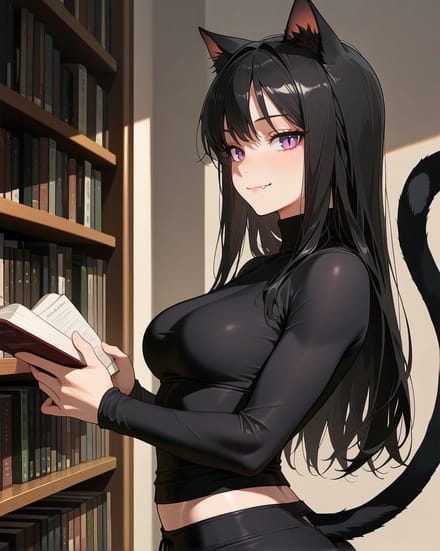

Like the cool, deadpan type? Talk to Kuroha, a kuudere catgirl. Looking for a husbando with a sharp tongue and a soft side? Try Leon, a tsundere. Or create your own waifu and write her personality from the first line.