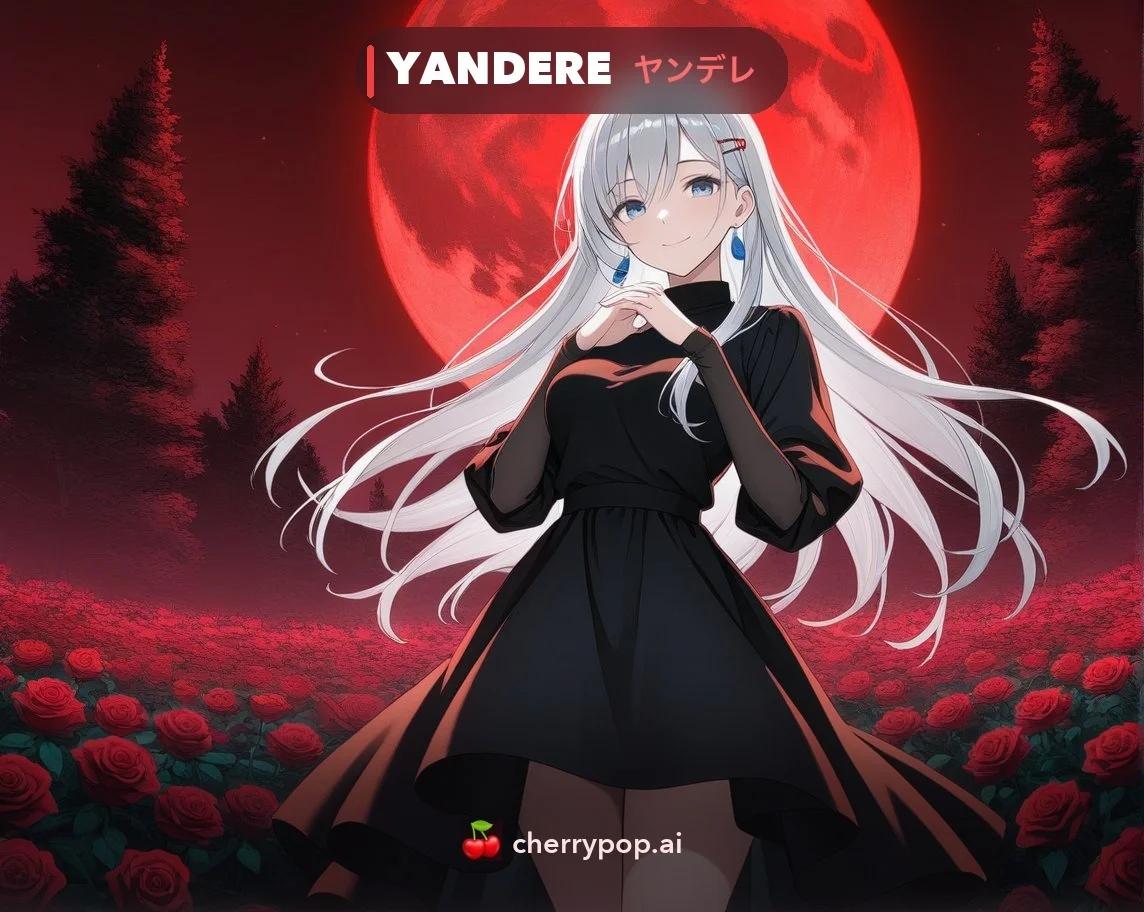
A yandere is a fictional character whose love, often sweet and devoted at first, turns obsessive, possessive and, inside the story, dangerous. That is the yandere meaning in one line. The word is Japanese, it comes from anime, manga and game fandom, and it is one of the best-known dere types, next to tsundere, kuudere and dandere.
This guide covers what the word literally means, where it came from, the traits that define a yandere, how the arc usually plays out, the main sub-types, well-known examples, and how a yandere differs from the other types of dere.
Yandere meaning: the quick definition
Yandere (ヤンデレ, pronounced “yahn-deh-reh”) joins two Japanese words:
- Yanderu (病んでる) – “to be sick,” here in the sense of mentally or emotionally unwell.
- Dere dere (デレデレ) – lovestruck, lovey-dovey, openly affectionate.
Put together, a yandere is someone who is “lovesick” in the most literal way: their love is so strong that it makes them unstable. English Wikipedia describes the type as affectionate, becoming either possessive or obsessive, and often willing to go to extreme lengths to be with the person they love.
The key detail is where the darkness comes from. A yandere often looks warm and openly loving at first, and the obsession grows out of that love or sits right alongside it. What makes the label fit is that the danger is about the person they love, not violence for its own sake.
Where the word comes from
Yandere was built on the model of tsundere, which was already popular on the Japanese internet. Japanese Wikipedia dates the word to around 2005, and it became a full-blown trend over the next few years. By 2007 there was already a Japanese guidebook devoted to the type, Yandere Taizen (“The Complete Yandere”).
The character type is older than the label. Japanese Wikipedia notes that several characters fit the pattern well before 2005, they just had no name to be sorted under. Western fiction had its own version too: English speakers used “bunny boiler” for an obsessive, spurned lover long before most of them had heard the word yandere.
Early on, the word was used almost only for female characters. It is now used for men as well, though less often, and male yanderes turn up regularly in otome games (romance games aimed at women).
Core yandere traits
Not every yandere shows all of these, but most show several:
- Total devotion. They put the person they love ahead of everything, sometimes including themselves. Japanese descriptions stress how endlessly kind and attentive they are, to a degree that looks strange from the outside.
- Intense jealousy. Seeing their love interest close to someone else hits them far harder than it would anyone else.
- Possessiveness. The thought “you’re mine” takes over. They want to know where their partner is and who they are with.
- Fear of being left. Under the obsession there is usually deep insecurity: a conviction that they will be replaced by someone better.
- A sweet face and a dark side. The visual shorthand in anime is the switch: a warm smile one moment, empty eyes the next.
- Escalation. In the story, their behavior moves from clinginess to surveillance, manipulation and, in the darkest works, violence against rivals.
How the yandere arc plays out
Most dere types move from cold to warm. The yandere runs the other way: warm first, then something darker. Japanese fans call the turn yami-ka (“becoming sick”) or kuro-ka (“turning black”). One common way to write the arc has four beats:
- Sweet and devoted. The character is loving, cheerful and sincere, not pretending. At this stage they look like a textbook deredere.
- The first crack. A small moment of jealousy, a rival, a missed call. On its own it means little.
- The spiral. The more they think about their love interest, the heavier the love gets and the more afraid they are of losing it. Clinginess becomes watching, and watching becomes control.
- The breaking point. The story’s climax, often a shocking one, where the obsession comes fully into the open.
Fans of the genre make a point that often gets lost in clips: the appeal is the slow build of tension, not a violent payoff. In many stories, the writer lets a yandere who feels secure drift back toward sweetness, while one who feels betrayed falls further. Some yanderes never hurt anyone at all.
Types of yandere
Fan wikis split yanderes into sub-types by how the obsession shows. The main ones:
- Aggressive (violent-type): turns hostility outward, at anyone seen as a threat to the relationship. This is the version most Western fans picture.
- Possessive: wants the love interest all to themselves and keeps a close eye on everyone around them.
- Dependent: relies on their partner for nearly everything and cannot picture life without them.
- Delusional: builds a fantasy version of the relationship and struggles to accept reality.
- Harmless: all the heavy, clingy love with none of the hostility toward others.
Famous yandere examples
The best-known yanderes come from anime, but the pattern is everywhere, including Western comics and thrillers. The strongest versions are written as tragic or dangerous, not as relationship goals.
Misa Amane, Death Note
Misa is the example most fans reach for first. She is a 19-year-old model when she enters the manga, and from the day she tracks down Light, 18 by then, she devotes herself completely to him as Kira. She halves her own lifespan twice for a power that helps him and says she would kill any other woman he dates. Her love is one-sided, and he uses her, which is the yandere tragedy in a single character.
Harley Quinn, DC Comics
Harley began as Dr. Harleen Quinzel, a psychiatrist at Arkham Asylum. Her patient, the Joker, manipulated her until she became his accomplice and lover, and her devotion to him drives her into crime. The Dere Types Wiki lists her as a yandere. The origin story frames that devotion as manipulation, not romance, and later stories move her toward Poison Ivy as a close friend and love interest instead.
Alex Forrest, Fatal Attraction
Fatal Attraction is a 1987 thriller, and Alex Forrest is its villain. After a brief affair, she refuses to accept that a married man has ended it. She stalks and harasses him, and it escalates until his family is in danger. The film’s most notorious scene gave English the phrase “bunny boiler,” which Wikipedia defines as an obsessive, spurned woman. The film treats her obsession as a threat, and that is the right way to read it.
Annie Wilkes, Misery
Stephen King’s 1987 novel is a horror story about devotion that becomes captivity. Annie, a former nurse and self-declared “number one fan” of the novelist Paul Sheldon, rescues him after a car crash and then holds him prisoner in her isolated farmhouse. Her obsession is with the writer and his books rather than a romance, which makes her a cousin of the yandere more than a textbook one, and King writes her as a monster, not someone to root for.
Yandere vs tsundere, kuudere and other dere types
Each dere type is defined by the gap between how a character acts and what they feel. The yandere is the best-known type where that gap runs from sweet to frightening.
| Type | On the outside | What is going on underneath |
|---|---|---|
| Yandere | Sweet and devoted | Obsessive love that turns dangerous |
| Tsundere | Cold, proud, snappy | Embarrassed affection they won’t admit |
| Kuudere | Calm, flat, unreadable | Real feelings they rarely show |
| Dandere | Quiet and shy | A talkative, warm person once comfortable |
| Deredere | Openly cheerful and loving | Exactly what you see |
| Himedere | Acts like royalty, expects to be pampered | Wants to be treated as special |
- Yandere vs tsundere: close to opposites. A tsundere hides their feelings behind harshness; a yandere shows them without any filter, and the feelings take over.
- Yandere vs kuudere: a kuudere keeps emotions locked behind a calm face. A yandere’s emotions are the whole story.
- Yandere vs dandere: both can look soft and quiet at first, but a dandere’s shyness fades into warmth, while a yandere’s sweetness gives way to obsession.
- Yandere vs himedere: a himedere wants to be treated like a princess. A yandere wants to be the only person in their partner’s life.
- Yandere vs yangire: a yangire snaps into violence from some trigger that has nothing to do with love. Without the obsessive romance, it is not yandere.
Why the yandere trope is so popular
- Tension. The sweetness and the menace sit in the same scene, and you never know which one is coming next. That is thriller writing, not romance writing.
- Love turned all the way up. A yandere is devotion pushed to its limit, and fiction is a safe place to look at what that would feel like.
- Tragedy. The best yandere stories make you sorry for the character, a person breaking under a feeling they cannot control.
- The gap. Like every dere type, the fun is the contrast between the surface and what lies under it.
Keep the line clear, though: yandere is a fiction trope, and the stalking, control and violence that drive it are harmful in real relationships, not a sign of love.
FAQ
What does yandere mean in English?
Roughly “lovesick.” It combines yanderu (sick) and dere dere (lovestruck), and describes a character whose love becomes obsessive and possessive.
What is a tsundere and yandere?
Two dere types that often run in opposite directions. A tsundere is typically harsh first (or in public) and sweet later (or in private); a yandere is often sweet first and turns obsessive. Our types of dere guide covers both and the rest of the family.
What makes a character yandere?
The love has to be the engine. A yandere is often introduced as warm and devoted, and becomes unstable because of that love, through jealousy and fear of losing their partner. A character who is dangerous for reasons that have nothing to do with love is not a yandere.
Can a man be a yandere?
Yes. The word was first used mostly for female characters, and it still is, but male yanderes exist too, especially in otome games (romance games aimed at women).
What does yandere girlfriend mean?
It is the yandere trope applied to a partner character: a girlfriend who is devoted to the point of obsession. We break down the archetype in our yandere girlfriend guide.
Meet a yandere
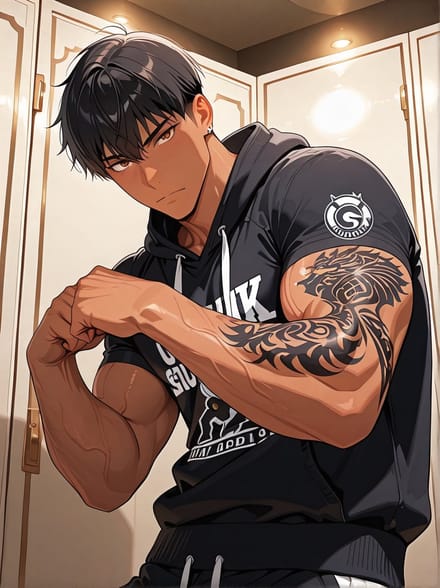
Want to see the trope from the inside of a story? On Cherrypop.ai (18+) you can chat with Kai Nakamura, or create your own yandere character with the personality you want.