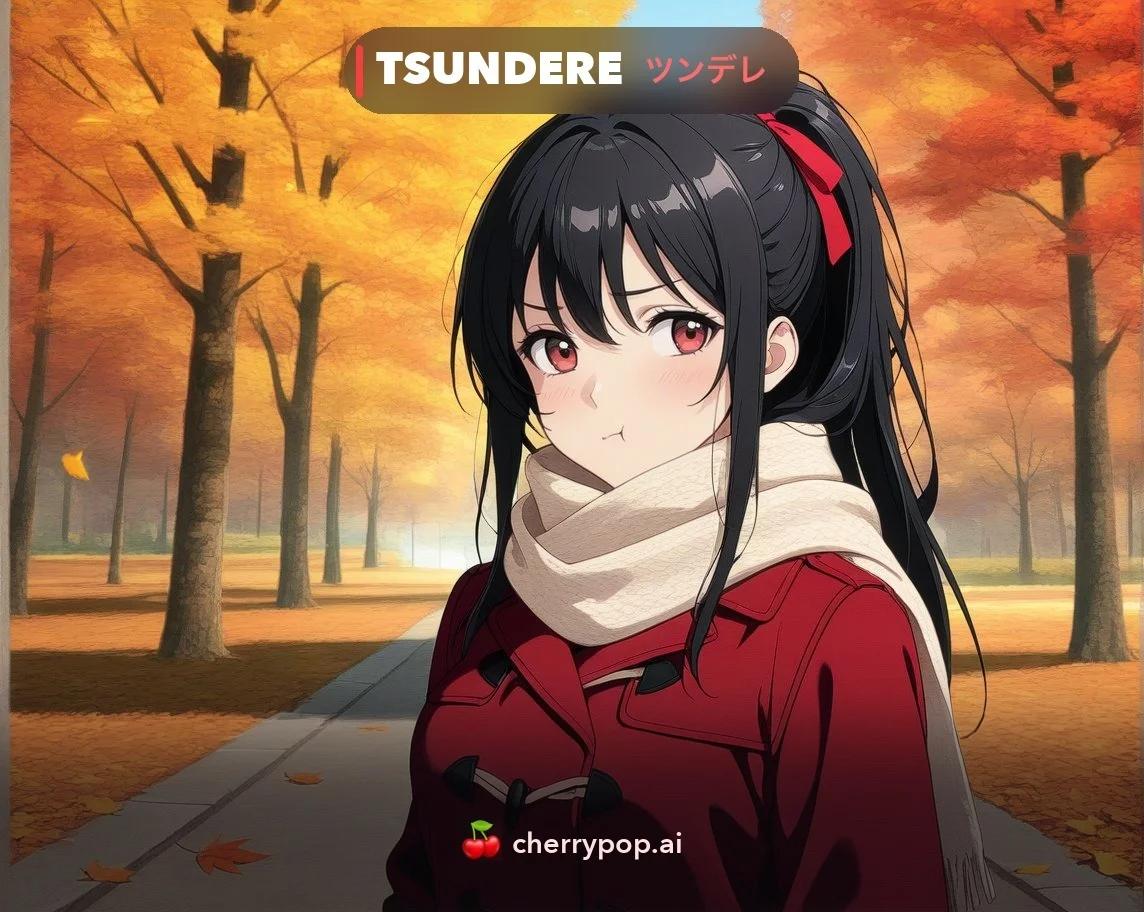
A tsundere is a character who acts cold, prickly or dismissive toward someone they like, then, over time or in private, shows the warm, affectionate side they were hiding. That is the short tsundere meaning. The word comes from Japanese, it started in anime and games fandom, and it is now one of the best-known character types in fiction.
This guide covers what the word literally means, where it came from, the traits that make a character a tsundere, how the arc usually plays out, well-known examples, and how a tsundere differs from a yandere, kuudere and the other “dere” types.
Tsundere meaning: the quick definition
Tsundere (ツンデレ, pronounced “tsoon-deh-reh”) describes a personality that is harsh on the outside and soft on the inside. The character hides real feelings behind irritation, sarcasm or pride. Over time, and usually around one specific person, the soft side comes through.
Fans use the word in two overlapping ways. One is a development arc: someone with “an initially harsh personality” who “gradually reveals a warmer, friendlier side over time.” The other, closer to Japanese dictionary definitions, is a contrast: cold and standoffish in public, sweet when alone with the person they like, and able to switch back and forth. Many characters do both.
The key detail is why the character is cold. A tsundere is not simply rude. They act distant because they have feelings they are too proud or too embarrassed to admit. A character who is cold to everyone for no reason is just cold.
Where the word comes from
Tsundere joins two Japanese ideophones (sound-symbolic words):
- Tsun tsun (ツンツン) – aloof, standoffish, turning away in a huff.
- Dere dere (でれでれ) – lovey-dovey, openly smitten, fawning.
Put together, the word literally describes someone who switches from “tsun” to “dere.”
The term came out of Japanese bishōjo games and visual novels. According to the Dere Types Wiki, which cites Niconico’s encyclopedia, it was first used on a Japanese fan forum in August 2002 as “tsuntsunderedere,” describing a character in a 2001 Japanese visual novel. Users on 2channel later shortened it to “tsundere.” Wikipedia also credits that game with making the word popular.
By 2006 the word had gone mainstream in Japan. A maid café in Akihabara started running tsundere-themed events that year, where staff played the role. Shueisha’s Imidas dictionary of current words picked up the term, and “tsunderera” (a Cinderella pun for people hooked on tsundere characters) was nominated for the 2006 Japanese buzzword of the year. In early 2007 Takara Tomy even showed a portable TV whose voice guidance started out harsh and got kinder the more you used it.
The idea is older than the word. Stories were full of proud people hiding their feelings long before fans had a label for it: Mr. Darcy in Pride and Prejudice (1813) insults Elizabeth Bennet at their first meeting, then spends the rest of the novel proving how much he cares. Anime and manga fans have been arguing about who the “first” tsundere was ever since the term caught on.
Core tsundere traits
Not every tsundere has all of these, but most have several:
- Pride. They hate looking vulnerable, and admitting they care feels like losing.
- Denial. The classic line is “It’s not like I did this because I like you or anything!” Variations include “Don’t get the wrong idea” and “I only did it because I had extra.”
- The cold shoulder. A sharp “hmph,” short answers, a head turned away, arms crossed.
- Teasing insults. Calling the person they like an idiot (baka in Japanese) the moment they feel embarrassed.
- Actions that contradict the words. They say they don’t care, then show up with a gift, stay up to help, or step in when someone is in trouble.
- Blushing and flustering. A compliment or a thank-you can make them lose their composure completely.
- Jealousy. They insist they are not interested, then get visibly annoyed when someone else pays attention to the person they like.
One common misconception: tsundere does not mean violent. The Dere Types Wiki separates tsundere (standoffish) from tsungire, a character who lashes out in anger when embarrassed. Plenty of famous characters mix the two, which is why fans often assume hitting is part of the type. It isn’t.
How the tsundere arc plays out
What makes a tsundere satisfying to watch is the change. One useful way to describe it is in three stages, using names some Japanese fans use:
- Tsun period (tsun-ki). The character is cool, critical, or openly irritated with the person they will later fall for. They look down on them, ignore them, or trade insults.
- Almost dere (dere-kake). The feelings start leaking out. They help, protect, or worry about the other person, then cover it with an excuse like “I just happened to be passing by.” This is the stage most people picture when they hear “tsundere,” with the character flipping back and forth.
- Dere period (dere-ki). They finally stop denying it and become openly warm and affectionate, at least with that one person.
Some stories stretch the middle stage out for the whole series, because the push-and-pull is the fun part. Others reach the dere stage early and spend the rest of the story on the couple. A common version is “cold in public, sweet in private”: the character stays prickly in front of other people but relaxes when it is just the two of them.
Famous tsundere examples
These characters show the type clearly:
Vegeta (Dragon Ball)
Vegeta is probably the best-known male tsundere. He starts as a proud, arrogant Saiyan prince who cares only about his own strength. After he settles on Earth and falls for Bulma, he still acts annoyed by her, gets embarrassed when she shows affection in public, and when the god Beerus slaps her in Battle of Gods, he explodes in rage, then flatly denies shouting “My Bulma!” once she says it made her feel loved. Over Dragon Ball Z and Dragon Ball Super he becomes far more open about how much he loves his family, which is the full tsun-to-dere arc across decades.
Hanako Koyanagi and Taro Kabakura (Wotakoi: Love Is Hard for Otaku)
These two office coworkers, 27 and 28 in the series, are a long-standing couple who argue constantly. They insult each other and bicker over games and hobbies, yet both clearly care deeply for the other and later marry. Fans often point to them as a tsundere couple: both play it tough, and both soften the moment the other is hurt or upset.
Germany (Hetalia: Axis Powers)
Wikipedia uses Germany from Hetalia as its example that the trope is not limited to women. He is portrayed as a tsundere and is often paired by fans with Italy, an easygoing “lovable loser” type, which makes his gruff exterior stand out even more.
Male tsunderes
The word was originally used almost only for female characters. Early Japanese dictionary entries described a heroine who is cold and standoffish day to day but turns sweet and affectionate when she is alone with the person she likes. Japanese has a separate word for the male version, oranyan: a man who acts tough and domineering (ora-ora) in public but turns affectionate, like a purring cat (nyan-nyan), in private. In English, most fans just say “male tsundere.”
Tsundere vs yandere, kuudere and other dere types
Tsundere is the oldest and best-known “dere” word, and most of the others are named after it. Here is how it compares. For the full list, see our guide to all types of dere.
| Type | On the outside | What is going on underneath |
|---|---|---|
| Tsundere | Cold, proud, snappy | Embarrassed affection they won’t admit |
| Yandere | Sweet and devoted | Obsessive love that turns dangerous |
| Kuudere | Calm, flat, unreadable | Real feelings they rarely show |
| Dandere | Quiet and shy | A talkative, warm person once comfortable |
| Deredere | Openly cheerful and loving | Exactly what you see |
| Himedere | Acts like royalty, expects to be pampered | Wants to be treated as special |
What is a yandere vs tsundere?
They are close to opposites. A tsundere starts harsh and becomes sweet. A yandere starts sweet, and their love turns obsessive and, in the fiction, dangerous. A tsundere hides their feelings; a yandere’s feelings take over everything. Yandere is a thriller and horror trope, not a model for real relationships.
Tsundere vs kuudere and dandere
All three look distant at first, but for different reasons. A tsundere is loud about it: sharp comments, blushing, denial. A kuudere is calm and emotionally flat, so the warmth shows up in small, quiet ways. A dandere is not cold at all, just shy, and opens up once they feel safe.
Tsundere vs deredere and himedere
A deredere is the tsundere’s end state with no tsun at the start: affectionate from day one. A himedere shares the tsundere’s pride but wants to be treated like a princess rather than hiding any feelings.
What is nyandere?
Nyandere comes from nyan (the Japanese “meow”) plus dere. It describes a cat-eared character who shows affection the way a cat does: clingy, playful, asking for head pats, adding “nya” to sentences. It is a sweet, openly affectionate type, not a variant of tsundere.
Why tsunderes are so appealing
Why is a tsundere so attractive? A few reasons the type works:
- The payoff feels earned. Warmth from someone who is warm to everyone is nice. Warmth from someone who was cold to you feels like you won something.
- The gap is the charm. Japanese fans call this gap moe: the appeal of seeing a tough exterior crack and reveal something softer.
- Built-in tension. The audience knows how the character feels before the character admits it. That dramatic irony keeps you watching.
- Great banter. Denials, comebacks and flustered excuses make for fun, quotable dialogue.
- It feels human. Most people have hidden a crush or covered embarrassment with a joke. A tsundere is that instinct turned up to eleven.
What does it mean if a girl (or guy) is a tsundere?
Outside anime, calling a girl or guy a tsundere usually means they act gruff or teasing but are clearly fond of you underneath: the friend who says “ugh, fine” and then drives across town to help. It is usually affectionate teasing, not an insult.
One caution: tsundere is a storytelling device. In fiction, the audience can see the hidden feelings. In real life, you can’t. If someone is consistently cold or dismissive toward you, the most likely explanation is that they are not interested. Take people at their word.
FAQ
What does tsundere mean in English?
There is no one-word translation. The closest English is “prickly on the outside, soft on the inside.” Literally, it combines tsun tsun (aloof, standoffish) and dere dere (lovey-dovey).
Is being called a tsundere an insult?
Usually not. It is typically playful, implying you act tough but secretly care. Some people do find it annoying, especially if they are being called “secretly in love” when they aren’t, so read the room.
Can a tsundere be male?
Yes. Vegeta from Dragon Ball and Germany from Hetalia are well-known examples. Japanese also has a separate term for the male version, oranyan.
What is a typical tsundere line?
“It’s not like I did this for you or anything!” Any sentence that denies caring while doing something caring is the classic tsundere move.
See a tsundere in conversation

Want to see how a tsundere plays out when you are the one on the other side of the “hmph”? On Cherrypop.ai (18+) you can chat with Leon, a tsundere, or create your own tsundere character with the personality you want.