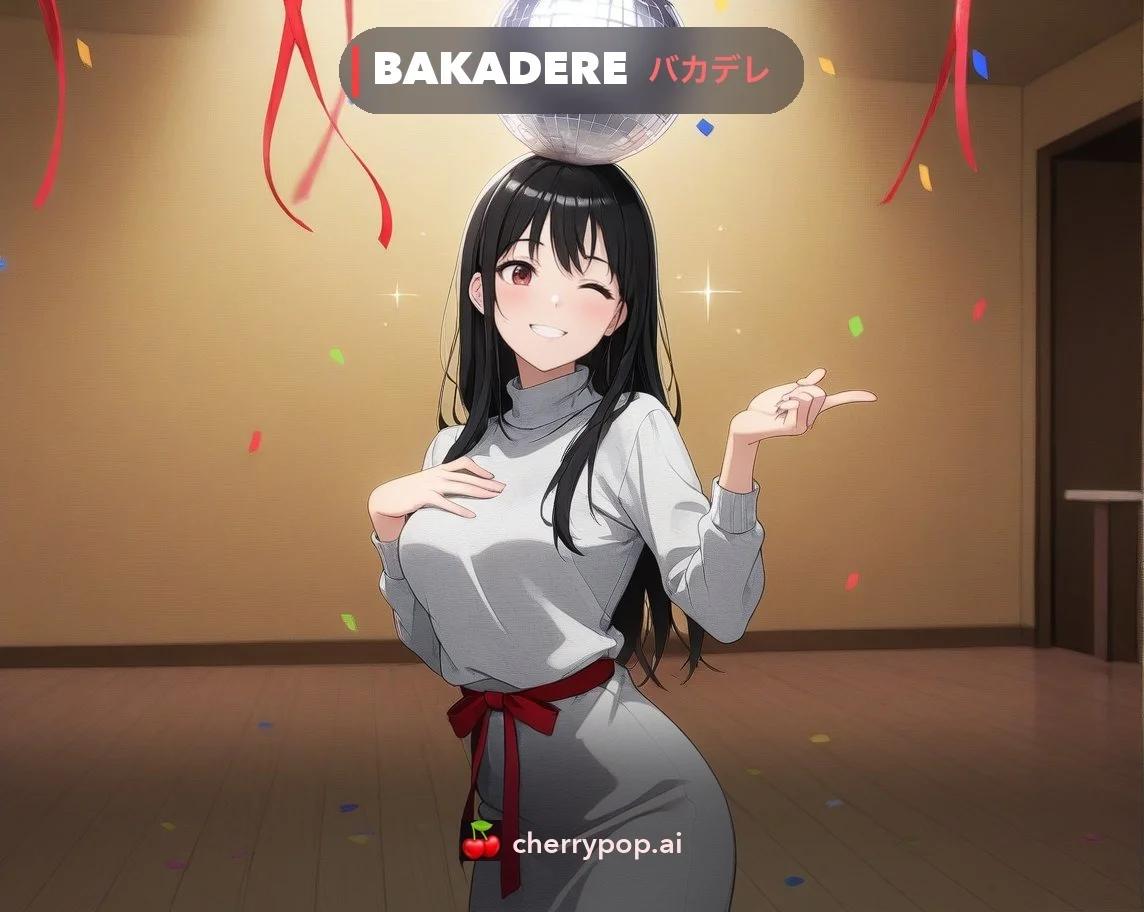
A bakadere is a character who is goofy, airheaded and a little clueless most of the time, but completely sincere and openly affectionate toward the person they love. That is the short bakadere meaning: lovable foolishness with a big heart. Like tsundere, the word comes from Japanese anime and manga fandom, and it is one of the sweetest entries on the list of “dere” types.
This guide covers what the word literally means, where it came from, the traits that make a character a bakadere, well-known examples, how a bakadere differs from a deredere or a himbo, and how to write one yourself.
Bakadere meaning: the quick definition
Bakadere (バカデレ, pronounced “bah-kah-deh-reh”) describes a personality that is silly on the outside and sincere on the inside. The character rushes into things without thinking, misreads situations and has hobbies other people find odd. Every so often, usually around the person they love, the goofiness drops away and they are surprisingly earnest, sweet or affectionate.
The Dere Types Wiki describes a bakadere as a character who “usually acts in a foolish and silly manner, but is also cute, lovey-dovey, and deredere towards their love interest.” The important part is that second half. A character who is only foolish is just comic relief. A bakadere is foolish and in love, and the love is what makes the foolishness endearing.
Where the word comes from
Bakadere joins two Japanese words:
- Baka (馬鹿 / バカ) – foolish, silly, idiotic. It is also a common playful insult, the “you idiot!” that anime characters shout at each other.
- Dere dere (でれでれ) – lovestruck, lovey-dovey, openly smitten.
Put together, it means someone who is “foolishly lovestruck,” or who shows love in a foolish way. According to the Dere Types Wiki, the term was coined on the Japanese internet around 2009 and later reached official media when it was the featured topic of an episode of the Japanese radio show Maji Pon! in 2013.
You will also see ahodere (アホデレ). In Japan it means the same thing: aho is another word for “fool,” more common in the Kansai dialect around Osaka, while baka is the standard Japanese word. Some English-language fan lists use “ahodere” differently, for a character who is oblivious to love, but that is a later Western variation rather than the original meaning.
Core bakadere traits
Not every bakadere has all of these, but most have several:
- Airheaded. They miss hints, forget the plan and take things literally. They are not unkind about it, just somewhere else.
- Impulsive. They act first and think later, which lands them in embarrassing situations again and again.
- Cheerful and optimistic. Failure does not stick. They bounce back from a disaster ready to try again.
- A wide-eyed sense of wonder. Small things delight them, and they often have a strange hobby they want to share with everyone.
- Kind to the core. There is no malice in a bakadere. Their mistakes come from enthusiasm, never from spite.
- Openly affectionate. They do not hide their feelings. If anything, they show them in the most over-the-top, slightly clumsy way possible.
- Serious when it counts. Behind the silliness, they can surprise everyone with a moment of real sincerity for the person they love.
The bakadere gap: why the silly side matters
Like most dere types, the bakadere runs on gap moe: the charm of seeing a side of someone you did not expect. With a tsundere, the gap is a cold person turning soft. With a bakadere, it runs the other way. Someone you have written off as a lovable goofball suddenly says exactly the right thing, or makes a big gesture that shows how much they have been paying attention all along.
That is why the type works best when the silly side is real and not just decoration. The more ridiculous a character’s everyday behavior, the more a quiet, sincere moment lands. A bakadere’s love story is usually wholesome and funny, and fans root for them precisely because they keep trying.
Famous bakadere examples
These characters show the type clearly:
Yor Forger (Spy x Family)
Yor, 27, is a city hall clerk who secretly works as an assassin. Outside of that job she is gentle, soft-spoken and a bit of an airhead, and she has almost no experience with romance. She agrees to a marriage of convenience with Loid Forger as a cover, then approaches being a wife with a mix of total sincerity and complete cluelessness. The Dere Types Wiki lists her as a bakadere, and she is a good reminder that the type is about how someone acts in love, not how capable they are.
Philip J. Fry (Futurama)
Fry is a 25-year-old pizza delivery guy who gets frozen on New Year’s Eve 1999 and wakes up in the year 3000. He is lazy, dim and prone to disaster, but he is devoted to Leela for the whole series. In the episode “Parasites Lost,” worms in his body make him smart, fit and romantic, and Leela falls for the new Fry. He evicts them anyway, because he wants to know if she could love the real him. He goes on to become her fiancé and later her husband. That episode is the type in miniature.
Homer Simpson (The Simpsons)
A father of three who is officially 36, Homer is lazy, impulsive and famously unqualified for his job as a nuclear safety inspector. He is also, as Wikipedia puts it, “fundamentally a kind-hearted man and fiercely protective of his family.” His devotion to his wife Marge, however clumsily he shows it, is the emotional center of many episodes, which is why he appears on bakadere lists alongside anime characters.
America (Hetalia: Axis Powers)
Hetalia’s personification of the United States is 19 by his creator’s account. He is cheerful, loud and known for not reading “the atmosphere” around him, obsessed with hamburgers and heroes, and thinks a map of the US is a world map. His bakadere side is mostly friendly rather than romantic, which shows the type can describe affection for friends too.
Bakadere vs deredere vs himbo
Bakadere overlaps with several other types, which is why fans argue about labels. Here is how it compares. For the full list, see our guide to all types of dere.
| Type | Defined by | How they show love |
|---|---|---|
| Bakadere | Foolishness plus a sincere, loving side | Openly, enthusiastically and a bit clumsily |
| Deredere | Constant warmth and cheer | Openly and sweetly, from day one |
| Himbo | Good looks, low cunning, kind heart | Loyal and earnest, no ego |
| Dojikko | Physical clumsiness | Not part of the definition |
| Tsundere | Pride and denial | Hides it behind a cold front |
What is the difference between a deredere and a bakadere?
Both are openly affectionate, so the difference is what defines the character. A deredere is defined by warmth: cheerful, kind and happy to see you, and often perfectly sensible. A bakadere is defined by foolishness first: the affection comes wrapped in chaos, bad plans and misunderstandings. Put simply, every bakadere has a deredere side, but most deredere characters are not airheads.
Bakadere vs himbo
A himbo is a handsome, often muscular man who is not very bright but is kind and loyal. That sounds a lot like a bakadere, and there is real overlap: Kronk from The Emperor’s New Groove and Joey Tribbiani from Friends turn up on both bakadere lists and himbo lists. The differences are scope and focus. Himbo is an English slang word for men, and good looks are part of the definition. Bakadere is an anime archetype for any gender, looks do not matter, and it centers on how the character behaves in love.
What is the difference between bakadere and ahodere?
In Japanese, none: they are two names for the same type, using two words for “fool.” In English fan circles, ahodere is sometimes used for a character who is oblivious to romance, including their own feelings, which is a narrower meaning.
Bakadere vs dojikko and other types
A dojikko is physically clumsy, always tripping or dropping things, but can be very smart. A bakadere is often clumsy too, but that is not what defines them: many are both, and the core trait is being scatterbrained. The rest of the dere family is further away: a tsundere hides affection behind pride, a kuudere behind calm, a dandere behind shyness, a himedere wants to be treated like royalty, a yandere‘s love turns obsessive, and an undere goes along with things to keep the peace. A bakadere hides nothing, which is half the charm.
How to write a bakadere
A bakadere only works if the foolishness has a source. Scatterbrained and sincere is charming; blank is not. Some practical tips:
- Give them a specific obsession. Fry has video games, America has hamburgers. A weird, concrete hobby makes the silliness feel like a personality instead of a gag.
- Make the mistakes come from enthusiasm. They burn dinner because they tried to make five dishes at once to impress you, not because they do not care.
- Keep them emotionally honest. They may not follow the plot, but they always say what they feel.
- Save a serious moment. Let them get it exactly right once in a while. The contrast is the payoff.
- Keep the joke on them. Nobody gets hurt by a bakadere’s foolishness except the bakadere.
An opening line that sets the tone: “Okay, don’t be mad, but I tried to surprise you with breakfast and the smoke alarm is now also awake. Pancakes are still happening, though. I believe in them.”
To try the type in an AI chat, you can build a bakadere in Cherrypop.ai’s character creator. Put the setup in the Scenario field (for example, your coworker who keeps “accidentally” ending up at your desk with snacks), a line like the one above in First Message, and the quirks in Additional Personality Details (“cheerful, scatterbrained, obsessed with houseplants, openly affectionate, surprisingly sincere when it matters”). Concrete quirks give the AI more to work with than a list of adjectives.
FAQ
What does bakadere mean?
Bakadere means a character who is foolish, airheaded and carefree but sweet and openly affectionate toward the person they love. It combines baka (fool) and dere dere (lovestruck).
What does baka mean?
Baka is Japanese for “fool” or “idiot,” or as an adjective, “foolish” or “ridiculous.” Between friends it is often playful rather than harsh, and it is a staple of anime dialogue.
What is a bakadere girl?
A woman who fits the type: cheerful, a bit of an airhead, prone to embarrassing herself, and completely devoted to the person she loves. Yor Forger from Spy x Family is a popular example.
Can a bakadere be male?
Yes. Fry from Futurama, Homer Simpson and America from Hetalia are all male examples. The dere labels started mostly with heroines, but fans use them for any gender.
Is calling someone a bakadere an insult?
Usually not. Among fans it is a term of endearment: it means you are goofy but lovable. It does still say “you are a bit of a fool,” so use it with people who are in on the joke.
Create your own bakadere
Want a character who is a little ridiculous and completely sincere? On Cherrypop.ai (18+) you can create your own bakadere character: choose their personality, set the scenario, write their first message, and chat with them in your browser, no app needed. It is free to start, with limits.